Tuesday, 5 September 2017

No Outsiders: What the Jackdaw saw - Julia Donaldson and Nick Sharratt


A small number of the picture books used in the No Outsiders scheme are now out of print so I have replaced them with new books that fit the No Outsiders ethos.
All picture books used in No Outsiders can be ordered from letterboxlibrary
Year 2
Text: What the Jackdaw saw by Julia Donaldson and Nick Sharratt
Lesson plan by Andrew Moffat / equalitiesprimary
Learning intention: To communicate in different ways
Success criteria: I know there are different ways to communicate, I can learn to use sign language
Starter: What is sign language? When is sign language used? Who can use sign language?
Main: Read “What the Jackdaw saw”; discuss why do all the animals in the story touch their head when Jackdaw speaks to them? What does touching your head mean in sign language? Why do you think the animals use sign language to communicate with owl?
Why does jackdaw use sign language at the end of the story?
Role play: Put the children in to a circle and ask for a volunteer to be Jackdaw. Jackdaw flies around the circle asking children to come to the party. Each child tries to warn Jackdaw about the storm using signing. Look at the sign words at the back of the book; children could choose “storm” or “danger” signing.
After a few children have tried to warn Jackdaw, have everyone blow and make lightning and thunder actions to make a storm. Jackdaw falls to ground. Then ask for someone to pick up jackdaw and explain what everyone was trying to communicate. Everyone teach Jackdaw how to sign storm / danger. Show jackdaw how to sign “Thank you” (fingers to chin and bring fingers forward like blowing a kiss but below the mouth)
Activity: Does anyone in the class know signing? Can they teach the class some words? Look at the sign words listed at the back of the book. Practice as a class. Children record by drawing and labelling diagrams: the sign for danger and thank you.
Plenary: If someone came to our class who was deaf, how might they feel? What could other children do to make sure no one felt like an outsider?
Afl questions: Why is learning to sign useful? Why should people who are not deaf learn words in sign language?


No Outsiders: That's not how you do it! Ariane Hofmann-Maniyar


A small number of the picture books used in the No Outsiders scheme are now out of print so I have replaced them with new books that fit the No Outsiders ethos.
All picture books used in No Outsiders can be ordered from letterboxlibrary

 Year 1
Text: That’s not how you do it by Ariane Hofman-Maniyar
Lesson plan by Andrew Moffat / equalitiesprimary
Learning intention: To accept people are different
Success criteria: I know we do some things in the same way, I know we do some things in different ways, I know it’s ok to be different
Starter: Show the children a simple maths sum such as 12+9 and ask for a child to solve it and explain to the class how they worked it out. Now ask the children if anyone knows a different way of working out the answer. Are there any other ways? What different apparatus could we use to help us? Is there only one way of doing the sum or are there lots of different ways?
Main: Read “That’s not how you do it” and ask children to talk in partners about Lucy. What was Lucy good at? When did everything change? How do you think Lucy felt about Toshi?
We see Lucy thinking, “That’s not how you do it” but she doesn’t say it out loud, why not?
When she does shout at Toshi, does Toshi get upset? What does he do?
Role play: Say to the children we are going to role-play the part of the book where Toshi does things differently. Stand the children in a circle and ask for a volunteer to think of an action we can all do (combing hair, digging, brushing teeth, kicking a ball) encourage all children to do the action and then ask for a volunteer to be Toshi. Toshi knows a different action; ask Toshi to perform a new action and as children realise what Toshi is doing encourage them to copy that action instead. Ask for a child to be Lucy and exclaim, “That’s not how you do it!” to which the group can reply togther, “It’s ok to be different!”.
Ask for a new Toshi volunteer to start a different action and encourage children to follow the new action. Repeat with a new Lucy and the spoken lines, so that lots of children get to be Toshi and Lucy. .
Activity: At the end of the story Toshi and Lucy make stars together in different ways. Show children two different ways of making a star and ask them in pairs to make a night sky full of paper stars using both methods.
Plenary: What do you think Lucy learns in this story? Do we have to do things the same way in our class? What do we say about being different? When Toshi first meets Lucy how does she treat him? (Like an outsider). What does Lucy need to do differently next time she meets someone or something new?
Afl questions: Why is Toshi different? If Toshi came to our class and did different things, what would we say?

Wednesday, 9 November 2016

Dialogue breaking down prejudice


A woman taking part in an anti-Muslim protest in the US changed her mind when a Muslim woman approached her, hugged her and invited her in to the local Mosque to talk. Other supporters talked to the protester calmly to try and get her to see things differently. When she stepped in side the Mosque she was greeted by applause.

The Mosque's spokesman said, "We focus on the similarities rather than on things that divide"

LI To understand how dialogue can change ideas 
Watch this clip 
https://www.youtube.com/watch?v=ErxlkMwVrUQ 

showing the hug and the conversation with the anti-Muslim protestor. In other (longer) clips we can see the man say to the protestor, "We can be friends" and, "How do you know I'm not Muslim?" He questions her calmly and gets her to question her beliefs. Why does he do this and what is the impact?Watch this film of the woman who gave the hug  https://www.youtube.com/watch?v=uY5NO8ox2y8 
how does she describe the impact of the hug? How do you think the women felt before the hug and after the hug. Why do you think the hug went viral? The woman talks about suffering hate crime in the street in the past; she must feel angry yet she remains calm and hugs the protestor. Why does she choose to remain calm and talk? Why doesn't she shout at the protestor? What does this show us about many people around the world and in America?Write a newspsper report for the incident. use quotes from the films

http://www.independent.co.uk/news/world/americas/anti-muslim-protester-won-over-by-hugs-and-debate-at-noor-islamic-centre-a6690801.html


Monday, 24 October 2016

Transgender Awareness KS2-3: 10,000 dresses by Marcus Ewert and Rex Ray

10,000 Dresses (Hardback)
Transgender awareness KS2-3                                                                Andrew Moffat
Text: 10,000 dresses by Marcus Ewert and Rex Ray
Resources: I am Leo programmme - CBBC
SEAL Outcomes: Getting on and falling out: I try to recognise when I or other people are pre-judging people and I make an effort to overcome my own assumptions
Good to be me: I accept myself for who and what I am
LI To consider what it means to be transgender

Starter: Check understanding of LGBT- in small groups children come up with definitions
Main : Read 10,000 dresses. At the beginning of the story do we think Bailey is a boy or a girl? What makes us think that? Does Bailey feel like a boy? Does Bailey feel like a girl? At no point in the story does Bailey identify as a boy or a girl; does wearing a dress make a child a girl?
Bailey’s family keep saying Bailey is wrong to want to wear a dress; how do you think this makes Bailey feel? What changes everything for Bailey? (meeting Laurel) Does Laurel make any comment about Bailey being a boy or a girl? Does Laurel care if Bailey is a boy or a girl?
What does transgender mean? (We are all assigned a gender at birth. Some people feel different to the gender they were assigned at birth; they live as the gender they identify with)
Student led activity: whole class: watch the CBBC “My Life” series episode 1 “I am Leo” on youtube . 28 minutes long, very positive and perfect for understanding about life as a transgender child. https://www.youtube.com/watch?v=0x_u2cs8DpI
Independent activity: In pairs children discuss and answer the following questions:
How does Leo describe what transgender means/ How did Mum feel at first when Lily became Leo? What did she do?/ Why is Leo’s passport so important to him/ What went wrong at primary School and why? / What do you think Primary School should have done differently / How did Steven Whittle change the law?
Plenary: If Bailey, or Leo came to our school what would be the response? Do we accept children for who they are without judgement? Remind children of the No Outsiders school ethos. What would you do if you heard others saying negative remarks to Bailey or Leo?
Suggested AFL questions: Today I have learned…/ Transgender means..... / If someone was Transgender in my class I would…

For more equality and diversity lesson plans see "No Outsiders in our school: Teaching the Equality Act in Primary Schools" by Andrew Moffat www.speechmark.net


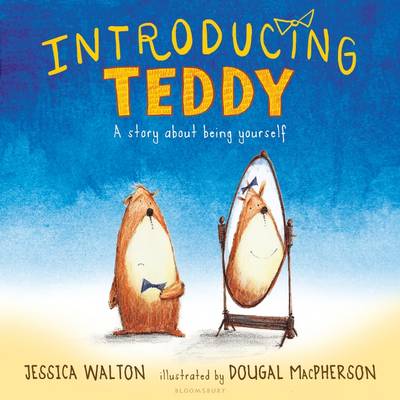
Transgender awarenessin KS1: Introducing Teddy by Jessica Walton and Dougal MacPherson

Introducing Teddy (Paperback)
Transgender awareness     KS1        Andrew Moffat / No Outsiders                                        
Text: Introducing Teddy: Jessica Walton and Dougal MacPherson
LO: To have different friends
Starter: Show an image of children on a playground. Who looks happy, unhappy, lonely, angry etc How can you tell if someone feels unhappy? What does empathy mean? Write a list of feelings demonstrated in the image.
Main: Read and discuss the story. At the beginning of the story what games do Errol and Thomas play together? One day Thomas doesn’t feel like playing; what does Errol do? Why doesn’t Thomas tell Errol what the worry is? Why does Thomas think Errol won’t want to be friends? What does Errol say to reassure Thomas?
Role play: Are we all the same in our class or are we different? Let’s work out how different we are in our class. Stand in a circle and play the hoop game: place a hoop in the middle of the circle and count down 5,4,3,2,1; when you get to one there must be two children in the hoop. The two children have to identify one way they are different, but emphasise we aren’t using gender as an example. So maybe the two children have different faith, or have different skin or hair or like different foods or are wearing different clothes. Repeat and every time you count down, two different children need to be in the hoop. A child cannot be in the hoop twice. The game is better when children enter the hoop in random order; emphasise sometimes a child may have to step back and allow another to be in the hoop. Can we work as a team and let everyone have a turn?
Activity: Design a poster with the title “We can be different”. Children draw a picture of themselves in the centre and around the outside list ways in which they are special and different.
Plenary: What was Thomas worried about? What does Errol say when Tilly says she knows in her heart that she is a girl teddy? (Errol says, “I don’t care if you’re a girl teddy or a boy teddy! What matters to me is that you are my friend!”) Does this change their friendship?
What can we learn from Errol?
Suggested AFL questions: Today I have learned / It’s ok to be different because…

For more equality and diversity plans see “No Outsiders In Our School: Teaching the Equality Act in Primary Schools” by Andrew Moffat www.speechmark.net

equalitiesprimary

Sunday, 10 July 2016

Teaching resilience KS2: Perfect Square by Michael Hall


Teaching resilience – KS2                                                                       
Text: Perfect Square by Michael Hall
Lesson plan by Andrew Moffat / www.equalitiesprimary.com
Resources: lots of squares, scissors, glue
LI To develop skills in resilience
Starter: Write ‘resilience’ on the board. Children in pairs to come up with a definition and then feed back to class. Can we come up with a class definition? What does the dictionary give as a definition?

Main : Read “Perfect Square”.
Discussion: what happens in this story, what happens to the square on its journey through the story? Which do you think was the most difficult challenge for the square? (when the square was torn in to scraps, shredded, or shattered etc)? Each time the square faced a new challenge, what did it do? How do you think the square felt when faced with each challenge? How do you think square felt each time it found a solution? When do you think the square is happiest?
Why do you think at the end, when square gets its shape back, it doesn’t stop? Why does square change in to a window?
Activity: Use the story as stimulus for an art session. Give each child squares of paper and go through the book; at each stage asking children to follow instructions given in the story (shatter the square/ rip it up etc) and then re-model the shapes in to a new image. The children could use the image suggested in the story or create  their own. Either use as a whole class activity with every child making multiple square images or give each table their own instructions and encourage children to work together to create images using co-operation.
Plenary:  How is the square showing resilience in this story? Lots of things happen to square and it has to think of new responses at every stage; does square ever give up and remain torn, crumpled or in pieces? Why do you think square does not give up? What does square want to show us? What is the message in this story?
Think about the ending; square could have stayed as a square for ever but it chose to change in to a window; what do you think the author is trying to tell us about change?
When we meet challenges in life; when things happen that we find difficult, what do we need to do?
In the story, square remains alone but in our lives there are people around us. If you are facing difficulty, who can you ask for help?

Suggested AFL questions: Today I have learned… resilience means….. When I experience challenges, I will… 
Re-visit the definition of resilience made in the starter- do we went to change it?

“No Outsiders in our school: Teaching the equality act in Primary Schools” by Andrew Moffat available from www.speechmark.net

For more lesson plans and resources see www.equalitiesprimary.com


Sunday, 3 July 2016

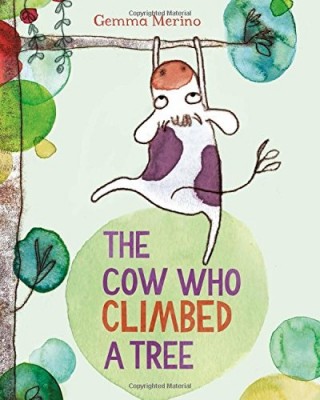
Challenging prejudice / thinking differently KS2 : The cow who climbed a tree: Gemma Merino

The Cow Who Climbed a Tree (Paperback)

Challenging prejudice / being assertive/ listening to new ideas 
Year 4-5-6
Text: The cow who climbed a tree: Gemma Merino
Lesson plan by Andrew Moffat: www.equalitiesprimary.com
Learning Intention: To be assertive
Success Criteria: I know what assertive means/ I know why some people are not assertive/ I am not afraid of new ideas
Starter: write assertive on board. Children come to a definition with a partner
Main: Read “The cow who climbed a tree”. Ask children to discuss in partners what the book is about and what the message is, then feedback. Look at page 1 where Tina reads a book; why is she reading? Look at her facial expression compared to the expression on the other cows’ faces; how would you describe each expression? Tina had a ‘thirst for discovery’ – what does that mean? How would you describe the behaviour of the other cows? Why do the cows tell Tina to stop thinking differently? What changed the cows?
Role play: ask for a volunteer to be Tina. Explain Tina is going to try and tell the rest of the class about something she has learned. Can Tina be assertive enough to convince us to listen? Use the words that the cows use when Tina tries to persuade them. Give Tina a card with the following statement to read out and persuade:
The world is round!
Explain a long time ago people believed the world was flat and if you sailed to the horizon you would fall off the edge. People could not see the world as anything other than flat so they didn’t think about alternative views. Tina’s job is to persuade us to listen to her.
Try the exercise with different children taking on the role of Tina. Can Tina remain calm when she argues her point? Can she listen to other views and respond?
Activity: Remind children about the Equality Act and what it’s for. Why is it needed? Do some people still believe we are not all equal? We have the Equality Act in the UK because there are still some people that don’t agree with No Outsiders, who believe that people who are different races, religions, or who have different sexual orientation, cannot get along.
Write an assertive letter to the Head Teacher of an imaginary school where No Outsiders is not used and the Equality Act 2010 is not mentioned. You may wish to write a letter saying you do not agree with No Outsiders or a letter saying you do agree. The intention is to be use language that is assertive to persuade the reader to your opinion.
Y6: look at http://www.wiscnews.com/baraboonewsrepublic/news/local/article_935d7201-c28b-55b0-9618-789cc770f27f.html an article about a school in America saying they do not welcome pupils who are LGBT. Write to the Head Teacher.
Plenary: Not every country has an Equality Act. There are many countries where people do not have equality. How would an Equality Act help people in those countries? How does our No Outsiders ethos help us to make sure everyone is equal?
AFL questions: Today I have learned… / If someone doesn’t believe in equality, I can…