Saturday, 17 November 2018

Mixed by Arree Chung

Mixed

Year 3-4 No Outsiders lesson plan 
Text: Mixed by Arree Chung
lesson plan by Andrew Moffat equalitiesprimary.com
Learning intention: To consider responses to racist behaviour
Success criteria: I understand what racism is / I can recognise racist behaviour / I know what to do if I hear or see someone being racist.
Starter: What is racism? Come up with a class definition. (racism is where someone is treated differently because of the colour of their skin or because of where they come from)
Main: Read “Mixed” stop at points in the story to discuss following questions and predict what comes next:
-       The first time a Red shouts, “Reds are the best!” how do the other colours react? (Look at their faces)
-       Look at the faces of the different colours when they divide the town; why are they looking so sad?
-        “Life felt so vibrant!” what does this mean?
-       Why were the other colours unhappy about Blue and Yellow being friends?
-       Why was Blue and Yellow’s child the colour green?
-       Why did the town tear down the walls?
-       What did the colours learn at the end of the story?
Role play/ Art activity: When Red first shouts “Reds are best!”, compare the responses of the Blues and Yellows. Does either response change the situation? Why not? Role play with two volunteers the Red shout and the Yellow response; why doesn’t the yellow response change the situation? (the Yellow response is no better than the Red behaviour). With two different volunteers role play the Blue response; why doesn’t the Blue response change the situation? (ignoring the situation has no effect) Why does no one tell Red they disagree? When no one puts another point a view across, what happens to the town? How can we stop the colours putting up walls? What could Blues and Yellows do at this point in the story to stop the walls going up? (they could work together and persuade the reds to change their mind).
We need to show the Reds that we can work together. Put the class in to groups of three and give each person a colour to work with (red, blue, green). Each group to create a poster to show the three colours work together successfully/ They can use words and images, but the aim is to show the three colours united.
Plenary: What is the word that describes Red’s behaviour? Red is being racist because he is judging a group of people by their skin colour. Red thinks he can only be with people who are the same colour. What does Red learn at the end of the story?
If you hear someone behaving like Red, what can you do? If you don’t feel able to speak up at the time, who can you tell? Remember, not everyone understands about or agrees with No Outsiders, but anyone can change their mind. If you hear someone saying something like, “Reds are best,” what can you say? You need to tell them about No Outsiders. Tell them about our school / town and how we’re all different – different skin, different religion, different families, but we all get on and it works!
Afl questions: What is racism? What is discrimination? Why is this story about No Outsiders?

For more No Outsiders lesson plans and guidance for creating an ethos in schools where everyone is welcome see:

No Outsiders in our school: Teaching the equality act in primary schools by Andrew Moffat

Reclaiming radical ideas in schools: Preparing young children for life in modern Britain by Andrew Moffat

Saturday, 29 September 2018

Can I join your club by John Kelly and Steph Laberis

Year 2-3 No Outsiders lesson plan 
Text: Can I join your club? by John Kelly and Steph Laberis
lesson plan by Andrew Moffat equalitiesprimary.com
Learning intention: To welcome different people
Success criteria: I know we are all different / I can name ways we are different / I have friends who are different / I don’t leave people out
Starter: What is a club, what is a club for? Is anyone in the class a member of a club? Why might someone join a club? Look at the front cover of the book and the body language of the animals- what do you think this story is about?
Main: Read “Can I join your club?” after the story discuss with the children the following questions
-       Why did Duck want to join a club?
-       Why did the different animals turn him away?
-       How did this make Duck feel?
-       When tortoise asked to join Duck’s club, why didn’t Duck check if tortoise could make a good quack noise?
-       Tortoise is very different to duck, why did Duck approve tortoise?
-       Why did Duck choose to call the club “Our Club” instead of “Duck Club”?
-       What did the animals learn at the end of the story?
Role play: Ask for a volunteer to set up a club. Start by giving them a sign that says their name eg “Ismail’s Club” and ask them to stand at the front of the class and invite people to join. Hopefully children will point out that the club shouldn’t be called “Ismail’s Club”, it should be called “Our Club”; if no one does, stop the role play and ask the children whether you have the name correct; what did the animals learn in the story? Cross out the child’s name and replace it with “our”.Now ask children one at a time to approach Ismail and ask to join the club. Ismail should use the line from Duck in the book; “I have to ask you a question.. do you want to be in a club with me? Application APPROVED!” Ismail repeat with lots of different children (Ismail should change “with me” to “with us”). Once you have about ten children if you don’t want to go through the whole class you could stop the role okay and ask Ismail, “Who is approved for your club?” and get the class to shout “Everyone!”
Activity: Say to the children what you like about the club we have invented today is that it is full of people who are different; no one is the same but no one is left out! Ask children to create a “Our club” poster and around the lettering draw children and label differences – identify and celebrate differences in the class first (say the best ting about our class is that we have differences – different skin, eye colour, hair, genders, some wear glasses, some have inhalers etc) Children shouldn’t name individual children from the class with their differences on the poster, rather create a poster showing generic children with differences.
Plenary: When Lion says Duck hasn’t got the right roar, why doesn’t Duck try harder and learn to roar properly so that Lion lets Duck in the club?  Why doesn’t Duck learn to make different noises to fit in? What can we learn from Duck?
Afl questions: Why is this story about No Outsiders? Who was made to feel like an outsider in the story? What can we do in our school to make sure no one feels like an outsider?

For 35 lesson plans and guidance on how to deliver a whole school ethos based on the Equality Act see "No Outsiders in our school: Teaching the equality act in primary schools" by Andrew Moffat

Saturday, 22 September 2018

The only way is badger by Stella J Jones and Carmen Saldana

The Only Way is Badger
Year 6 No Outsiders lesson plan 
Text: The only way is badger by Stella J Jones and Carmen Saldana
lesson plan by Andrew Moffat equalitiesprimary.com
Learning intention: To consider use of language and freedom of speech.
Success criteria: I know what Freedom of speech means / I know how language can be used to persuade people / I know how important pupil voice is
Starter: What does Freedom of speech mean? Explain it is the freedom to say what you think. Can words hurt people? What if someone says a group of people should be hurt – is it always ok for people to say what they think?
Main: Read “We are all Badger” stop at points in the story to discuss following questions:
-       How does Badger make other animals listen to him?
-       Discuss the language Badger uses such as “I’m only trying to help you” – why is this effective?
-       When Badger starts chanting “No deer here” what is the impact on a) deer b) other animals?
-       Why does Badger interrupt Moose when he says, “I really think..”
-       Why do the smaller animals skip in to the small badger burrows, how are they feeling?
-       When Badger instructs the animals to bark, why does rabbit say, “I don’t like where this is going?” what is rabbit realising?
-       Why does Badger end up alone?
-       What does Badger learn at the end of the story
Role play: By the end of the story the forest is empty; Badger has made everyone an outsider. At the end of the story he changes his mind and hopefully he has learned it’s ok to be different, but many animals had to leave their homes during this story. How will these events affect the animals in the forest? When would have been the best time to stop this happening?
Look at the very start of the story – how does it all begin? Give children the lines that Badger says on the first two or three pages; in the story the animals comply, but what other options are there when we hear people saying these lines? Ask children to consider responses and reply to Badger; speak up, use pupil voice and change the outcome of the story.
Activity: The ending is very quick. Does Badger really understand or is he only changing his behaviour because all his friends have left? What happens next? Do you think the animals accept Badger? Continue the story to show what happens next and show how the animals make sure this never happens again, or devise a lesson plan for young animals in the forest school to teach about diversity and difference so that this never happens again.
Plenary: Consider freedom of speech- what is it? Should Badger have freedom of speech? Do you think if we had a discussion with Badger at the start, we could have changed his mind or maybe stopped animals having to leave? If Badger believed all deers should be killed, should he be allowed to say that? Would Badger just change his mind by himself? How do people change their minds? How do we get people to hear and think about different ideas? 
Afl questions: What is freedom of speech? Should everyone have freedom of speech? Is there a time when someone should be denied freedom of speech? Why is this story about No Outsiders? 


Thursday, 26 July 2018

How to be a lion by Ed Vere


Year 2 lesson plan
Text: How to be a lion by Ed Vere
Lesson plan by Andrew Moffat / equalitiesprimary.com
Learning Intention: To have self-confidence
Success Criteria: I know  we are all different / I know sometimes it’s hard to be different / I know what self-confidence means / I know how I help someone feel confident
Starter: Show the children the front cover of the book. How do you think Lions are expected to behave? If this book was an instruction manual for lions, what would be the first three, most important instructions?
Main: Read “How to be a lion” all the way through. At the end discuss:
-       How is Leonard different?
-       Look at the page where Leonard and Marianne walk together; what can we learn from these animals?
-       How do you think Leonard feels when the other lions come prowling around?
-       Why are the other lions so angry towards Leonard?
-       Look at the page where Leonard walks away in the rain – how is he feeling? Why?
-       How do you think Leonard feels when he goes back to speak to the other lions?
-       “Why don’t you be you .. and I will be I.” what does Leonard mean?
Role play: Ask children to think of ways they are different to others in the classroom. Perhaps they like different foods or games; good at football, skipping, swimming, catching, maths, art; perhaps they look different or speak different languages. Once each child has found a "different" partner stand the children in a circle and ask each pair to meet in the middle one pair at a time. each pair to explain how they are different, then say together, "You be you and I'll be I - we both belong," and do a high five.
Activity: Show the page where Leonard has doubts; “Must I be fierce? Must I change?” Children draw the image and write their response to Leonard to help him feel confident. Encourage children to give examples in our school of ways we are different or unique, but we work together. Children could explain what No Outsiders means and how it relates to this story.
Plenary: Why does the author end the book with a question? What is the author trying to encourage the audience to do? How would you answer the question?
AFL questions: Why is this story about No Outsiders? If you see someone feeling unconfident or feeling like an outsider, how can you help?

See lesson plans and guidance to build your equality ethos in school: No Outsiders in our school: Teaching the Equality Act in primary schools by Andrew Moffat

Using parent / child workshops to strengthen community cohesion around school: Reclaiming radical ideas in schools: Preparing young children for life in modern Britain by Andrew Moffat

Everybody’s welcome by Patricia Hegarty


 Year 1
Text: Everybody’s welcome by Patricia Hegarty
Lesson plan by Andrew Moffat / equalitiesprimary.com
Learning Intention: To make you feel welcome
Success Criteria: I know we are all different / I know how we are different/ I know why someone might not feel welcome / I know how I can make someone feel welcome
Starter: Show the children the picture of the mouse inside the front cover with the title “everybody’s welcome”. What is the mouse doing? Does the mouse look welcoming? How? If the mouse had hands in its pockets and a frown, would the mouse look welcoming? Who can show me that pose?
Main: Read “Everybody’s welcome” all the way through.
-       Why does frog need a home? What does mouse say? Why does mouse welcome frog?
-       Why do the animals form a chain to build the house?
-       Why aren’t mouse, frog and the rabbits scared of the big bear?
-       At the end the animals say everybody in their house “will feel that they belong”- why are they all smiling and holding hands? Would this be a good house to live in? Why?
Role play: Say this book reminds you of our class; we’re all different and yet we’re here together helping each other to learn and to get along. Read through the book again and this time, ask children to take on different roles of animals and of the mouse saying “Come and join us!” By the end of the book you want lots of children role playing hammering and sawing, building their house together. Finish by standing in a circle, holding hands and saying the last line together: Our class will be so happy and everybody in it will feel that they belong”
Activity: Children draw a picture of different animals building their house together. Write a sentence – everyone belongs or we can work together or we are all different, we can work together.
Plenary: What are the animals learning about difference as they build their house? Why is this story like our class? We say there are “No Outsiders” in our class – what does that mean?
AFL questions: Why is this story about No Outsiders? How can you make someone feel welcome?

See lesson plans and guidance to build your equality ethos in school: No Outsiders in our school: Teaching the Equality Act in primary schools by Andrew Moffat

Using parent / child workshops to strengthen community cohesion around school: Reclaiming radical ideas in schools: Preparing young children for life in modern Britain by Andrew Moffat

King of the sky by Nicola Davis


Raising awareness of immigration: Year 6 lesson plan
Text: King of the sky- Nicola Davis
Lesson plan by Andrew Moffat / equalitiesprimary.com
Learning Intention: To consider responses to immigration
Success Criteria: I know what immigration means / I know what empathy means / I can empathise with a person in a different situation to me.
Starter: What does immigration mean? Why might a person immigrate? How can immigration affect a person? What do think it feels like to start a new life in a new town with a different language and culture?
Main: Read “King of the sky” Stop as you go through the book to ask questions and discuss:
-       In the first 3 pages (up to Rome) what do we find out about the boy?
-       How are Mr Evans and the boy different, how are they similar?
-       What do we find out about Mr Evans as the story unfolds?
-       Why do you think Mr Evans has such faith in the pigeon with the milk-white head?
-       Why do you think Mr Evans enters the milk-white pigeon in to a race from Rome?
-       “A part of me was going with him. I wasn’t sure it would come back” what is the boy thinking?
-       Why do you think the author chose to create a storm for racing day?
-       “Get out there boy AND WELCOME HIM” what is the boy learning?
-       “The boy knew at last that he was home” does the author mean the pigeon or the boy?
Activity 1:  Consider how the boy feels throughout the story and what events affect his emotions. Create a story line showing the main events in the text and show how each event impacts on the boy.
Activity 2:  Write a character description for the boy and for Mr Evans. Compare and contrast their characters, experiences and their roles in the story.
Activity 3: Write diary entries for the boy using the major events in the story- his arrival in wales, meeting Mr Evans, learning about pigeons, building up for the bog race, waiting for the pigeon to return, the return of the pigeon. Show the boy developing in confidence through his diary.
Plenary: The boy is an immigrant; he comes from Rome to live in Wales. Why is this difficult for him at first? Why does the description of the town make the boy think, “This is not where you belong”? Why do you think Mr Evans helps the boy? Why doesn’t Mr Evans tell the boy to go away? What was Mr Evans trying to show the boy? What can we learn from Mr Evans? What can we learn from the boy?
AFL questions: What is the message in this story? Why is this story about No Outsiders?

For 35 "No Outsiders" lesson plans EYFS- Y6 based on picture books see "No Outsiders in our school: Teaching the Equality Act in Primary Schools" by Andrew Moffat

For parent / child 'No Outsiders' workshops for schools see "Reclaiming radical ideas in schools: preparing young children for life in modern Britain" by Andrew Moffat

Sunday, 18 February 2018

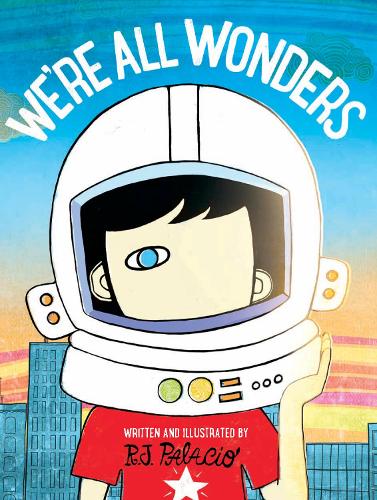
We’re all wonders by RJ Palacio


We're All Wonders (Paperback)
Year 3 No Outsiders lesson plan 
Text: We’re all wonders by RJ Palacio
lesson plan by Andrew Moffat equalitiesprimary.com
Learning intention: To use my pupil voice
Success criteria: I know everyone has differences, I know what unique means, I know how people can feel hurt, I know what a bystander is, I know what to do if I see someone being unkind
Starter: What does unique mean? How can a person be unique? What does bystander mean? (when someone sees something they know is wrong but chooses not to say anything or do anything) In what situation might someone be a bystander?
Tell the children, there is one part of the story where we see children act as bystanders; at the end of the lesson you will ask for children to identify that part.
Main: Read “We are all wonders”. Auggie says he is not an ordinary kid; in what ways is Auggie ordinary and how is Auggie different from other kids? Why are Auggie’s feelings hurt? Why does Auggie say he is a wonder? Why does Auggie say he wants people to change the way they see? Look at the page where the boy holds out a ball to Auggie; what’s changed for Auggie on this page? Which part of the book shows people being bystanders? What needs to happen here?
Role play: We are going to practice using our pupil voice and choosing not to be bystanders. In this story Auggie is called names for being different and everyone acts like a bystander because no one uses their pupil voice to speak up for him. Ask for a volunteer to be Auggie and give out cards to every other child. All the cards are blank except for a small number which have a star on them. Explain to the children that we are going to role-play the part of the book where children choose to be bystanders but some of us are going to practise choosing not to be bystanders. If your card is blank, for this role play you need to remain a bystander but if you have a star you need to choose to use your pupil voice and speak up for Auggie. Tell the class you cannot ask anyone to pretend to be unkind towards Auggie so you will take that role. You are going to tell Auggie he is different and doesn’t belong here but then say you want to hear people who have stars speak up, use their pupil voice and defend Auggie (you might want to rehearse some ideas first). Repeat the role play with different children being Auggie and different children speaking up. For the last one don’t give out cards and say you want everyone to speak up. Praise the class for not being bystanders and using their pupil voice.
Activity: Children draw “Don’t be a bystander” posters showing different responses to bullying.
Plenary:
In the story when children call Auggie names why doesn’t Auggie use his pupil voice and speak up? Ask children who role played being Auggie how they felt when you said they were different and didn’t belong, and how they felt when children used their pupil voice. Discuss what children can do if they see bullying (tell an adult, remove the child: ensure children have strategies)
Afl questions: Why might some children feel like outsiders on our playground? What can we do in our school to make sure no one feels like an outsider?

For more No Outsiders lesson plans see "No Outsiders in our school: Teaching the Equality Act in primary schools" by Andrew Moffat

For No Outsiders parent / child workshops see "Reclaiming radical ideas in schools: Preparing young children for life in modern Britain" by Andrew Moffat