Thursday, 26 July 2018

King of the sky by Nicola Davis


Raising awareness of immigration: Year 6 lesson plan
Text: King of the sky- Nicola Davis
Lesson plan by Andrew Moffat / equalitiesprimary.com
Learning Intention: To consider responses to immigration
Success Criteria: I know what immigration means / I know what empathy means / I can empathise with a person in a different situation to me.
Starter: What does immigration mean? Why might a person immigrate? How can immigration affect a person? What do think it feels like to start a new life in a new town with a different language and culture?
Main: Read “King of the sky” Stop as you go through the book to ask questions and discuss:
-       In the first 3 pages (up to Rome) what do we find out about the boy?
-       How are Mr Evans and the boy different, how are they similar?
-       What do we find out about Mr Evans as the story unfolds?
-       Why do you think Mr Evans has such faith in the pigeon with the milk-white head?
-       Why do you think Mr Evans enters the milk-white pigeon in to a race from Rome?
-       “A part of me was going with him. I wasn’t sure it would come back” what is the boy thinking?
-       Why do you think the author chose to create a storm for racing day?
-       “Get out there boy AND WELCOME HIM” what is the boy learning?
-       “The boy knew at last that he was home” does the author mean the pigeon or the boy?
Activity 1:  Consider how the boy feels throughout the story and what events affect his emotions. Create a story line showing the main events in the text and show how each event impacts on the boy.
Activity 2:  Write a character description for the boy and for Mr Evans. Compare and contrast their characters, experiences and their roles in the story.
Activity 3: Write diary entries for the boy using the major events in the story- his arrival in wales, meeting Mr Evans, learning about pigeons, building up for the bog race, waiting for the pigeon to return, the return of the pigeon. Show the boy developing in confidence through his diary.
Plenary: The boy is an immigrant; he comes from Rome to live in Wales. Why is this difficult for him at first? Why does the description of the town make the boy think, “This is not where you belong”? Why do you think Mr Evans helps the boy? Why doesn’t Mr Evans tell the boy to go away? What was Mr Evans trying to show the boy? What can we learn from Mr Evans? What can we learn from the boy?
AFL questions: What is the message in this story? Why is this story about No Outsiders?

For 35 "No Outsiders" lesson plans EYFS- Y6 based on picture books see "No Outsiders in our school: Teaching the Equality Act in Primary Schools" by Andrew Moffat

For parent / child 'No Outsiders' workshops for schools see "Reclaiming radical ideas in schools: preparing young children for life in modern Britain" by Andrew Moffat

Sunday, 18 February 2018

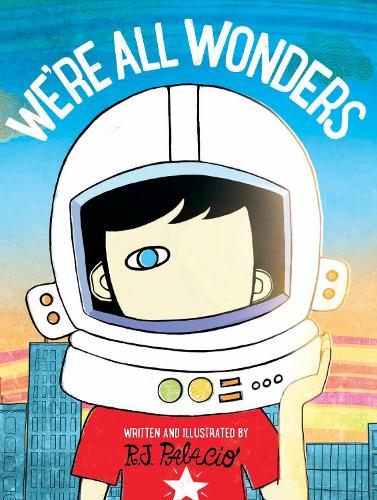
We’re all wonders by RJ Palacio


We're All Wonders (Paperback)
Year 3 No Outsiders lesson plan 
Text: We’re all wonders by RJ Palacio
lesson plan by Andrew Moffat equalitiesprimary.com
Learning intention: To use my pupil voice
Success criteria: I know everyone has differences, I know what unique means, I know how people can feel hurt, I know what a bystander is, I know what to do if I see someone being unkind
Starter: What does unique mean? How can a person be unique? What does bystander mean? (when someone sees something they know is wrong but chooses not to say anything or do anything) In what situation might someone be a bystander?
Tell the children, there is one part of the story where we see children act as bystanders; at the end of the lesson you will ask for children to identify that part.
Main: Read “We are all wonders”. Auggie says he is not an ordinary kid; in what ways is Auggie ordinary and how is Auggie different from other kids? Why are Auggie’s feelings hurt? Why does Auggie say he is a wonder? Why does Auggie say he wants people to change the way they see? Look at the page where the boy holds out a ball to Auggie; what’s changed for Auggie on this page? Which part of the book shows people being bystanders? What needs to happen here?
Role play: We are going to practice using our pupil voice and choosing not to be bystanders. In this story Auggie is called names for being different and everyone acts like a bystander because no one uses their pupil voice to speak up for him. Ask for a volunteer to be Auggie and give out cards to every other child. All the cards are blank except for a small number which have a star on them. Explain to the children that we are going to role-play the part of the book where children choose to be bystanders but some of us are going to practise choosing not to be bystanders. If your card is blank, for this role play you need to remain a bystander but if you have a star you need to choose to use your pupil voice and speak up for Auggie. Tell the class you cannot ask anyone to pretend to be unkind towards Auggie so you will take that role. You are going to tell Auggie he is different and doesn’t belong here but then say you want to hear people who have stars speak up, use their pupil voice and defend Auggie (you might want to rehearse some ideas first). Repeat the role play with different children being Auggie and different children speaking up. For the last one don’t give out cards and say you want everyone to speak up. Praise the class for not being bystanders and using their pupil voice.
Activity: Children draw “Don’t be a bystander” posters showing different responses to bullying.
Plenary:
In the story when children call Auggie names why doesn’t Auggie use his pupil voice and speak up? Ask children who role played being Auggie how they felt when you said they were different and didn’t belong, and how they felt when children used their pupil voice. Discuss what children can do if they see bullying (tell an adult, remove the child: ensure children have strategies)
Afl questions: Why might some children feel like outsiders on our playground? What can we do in our school to make sure no one feels like an outsider?

For more No Outsiders lesson plans see "No Outsiders in our school: Teaching the Equality Act in primary schools" by Andrew Moffat

For No Outsiders parent / child workshops see "Reclaiming radical ideas in schools: Preparing young children for life in modern Britain" by Andrew Moffat

Sunday, 14 January 2018

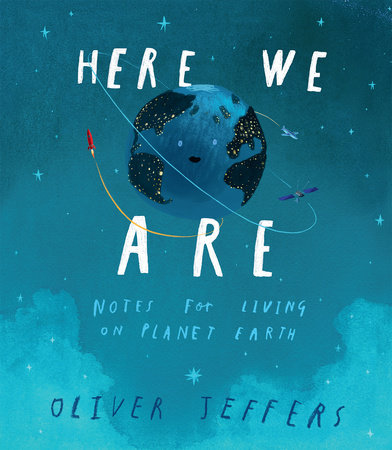
No Outsiders: Here we are by Oliver Jeffers

Image result for here we are oliver jeffers
Year 5-6 Parent / Child workshop
Text: Here we are - Oliver Jeffers
lesson plan by Andrew Moffat / equalitiesprimary
Learning intention: To consider what we don't know (yet)
Success criteria: I know things / I know I don't know things / I know how I can find out about new things / I am excited about my future 
Starter: Look at the front cover of the book. What do think this book is going to be about? There are 36 pages in this book; what do you think the author is going to include? Who do you think the book is written for?
After discussion open the book and read the introduction page "To my son, Harland..." What does this tell us about the aims of the book and why it was written?
Main: Read “Here we are” start to finish without stopping for discussion. At the end give each child and their adult time to discuss the book. Put the following questions on the board to consider:
- What were the author's aims? 
- What does the author say about earth and who lives here?
- If you have questions, what does the author advise?
- Why does the author say, "You're never alone on earth" at the end? What do you notice about the people?
Role play: The end of the book tells us to ask questions if we need to know something. We all know things, but does any person on earth know everything? Ask each child and adult to think about the things they know and don't know. Give out small cards of two different colour and ask each child and parent to write things they do know on one colour and things they don't know on the other, then collect the cards in and have two different piles of card; one pile for things we do know and one for things we don't. For example, do you know about different faiths? Do you know how aeroplanes fly? Can you explain lightning? In the book what does the author suggest we do if we have a question? (ask someone). Choose some "don't know" cards and read them out (you don't need to identify who wrote the cards); does anyone in the room know an answer or have explanations? Is there anyone else we can ask outside the room? (People might suggest we look up the answer on the internet; agree to this and remind people that all answers on the internet were also written by a person so someone somewhere knows the answer)
Activity: Look at the very last page where the author says; "There are only three words you need to live by, son: respect, consideration and tolerance." Identify definitions for these words; discuss why do you think the author chose these words? 
Each child and parent create a piece of art for three words we need to live by. People can use the words given by the author in the book or choose three new words. Encourage people to consider the aims of the book if they choose new words.There are many pages in the book that could be chosen as a stimulus for art. The page depicting the diverse people in the world is also key.
Plenary: Why do you think the author wrote the book? Is there a message in this book? How do you think the author wants his son to live as he grows up? Revisit the original Learning Intention:  How do we find out about things we don't know? Is there an age where people stop learning? In the book the author says "we haven't quite worked everything out, so there is plenty left for you to do"; what does he mean? 
Afl questions: How does this book relate to No Outsiders? What can we learn from this book? 

For more parent/ child  No Outsiders workshops to use in schools see:


Tuesday, 12 September 2017

No Outsiders: Leaf by Sandra Dieckmann


Year 6
Text: Leaf by Sandra Dieckmann
lesson plan by Andrew Moffat / equalitiesprimary
Learning intention: To overcome fears about difference
Success criteria: I can accept and work with people who are different to me, I can explore difference without fear,  I can look for solutions to challenging situations,
Starter: Discuss the success criteria; what does it mean? How can it be relevant to us in school? Look at the front cover of the book; what do you see, what do you notice about the animal and the habitat. What do you think this story might be about?
Main: Read “Leaf” stop during the story to ask children in pairs to discuss the reaction of the animals to the polar bear, also to discuss what the polar bear might be doing with the leaves.
Why do the animals have such a negative and fearful reaction to the polar bear?
What changes the animals’ opinions?
Role play: In the story Leaf is an outsider; Leaf doesn’t try to talk to the other animals: why not? Look at the page where the animals are talking and using words like Monster, Huge, Needs to go. Who has the power in this situation and why? (the animals have power because there are more of them and they are safe). Focus on how we could change this situation. In pairs come up with points for a discussion to encourage the animals to find a solution. Think about what you can say to persuade them; it’s not enough to say “Just listen to Leaf”. (encourage children to think about the Equality Act and protected characteristics used to ensure equality perhaps use the protected characteristics that the animals may have, to show they are all different yet they all belong)
Activity: Create a sketch of the animal meeting where they discuss reasons for and against talking to him (he is dangerous / he is lost). Label each animal and identify differences for each to show that despite their own differences, they live and work together. Our aim is to demonstrate that Leaf also has differences and that means he fits in: we all have differences.
Plenary: The last line says the animals would tell the story to everyone so that “No polar bear would ever get lost again”. What other reason is there for the animals to tell this story? What have they learned through this experience? (to accept difference, to avoid prejudice, to find solutions, to work together)  
Afl questions: Why do some people show prejudice to others? What can I do when I hear someone showing prejudice? Why is this about No Outsiders?


No Outsiders: The Thing by Simon Puttock and Daniel Egneus


Year 6

Text: The Thing by Simon Puttock and Daniel Egneus
lesson plan by Andrew Moffat / equalitiesprimary
Learning intention: To welcome difference and stand up to discrimination
Success criteria: I know there are some things I have not yet experienced , I am curious about new and different experiences, I understand how some people are labelled by rumours and assumptions and I can stand up to prejudice and discrimination.
Starter: Define “discrimination” and “prejudice” ask children to give examples of how and why someone can suffer discrimination
Main: Read “The Thing”. Discuss the reactions of the four animals that first find the thing. Is the reaction the same from all animals? What other reactions are there? Look at the page where animals say, “That thing does not belong. It has to go.” Why do you think some animals say that? Why do you think there was “quite a lot of bad feeling”? Is this reaction and behaviour an example of prejudice or discrimination? Encourage debate.
Role play: Why do you think The Thing chose to remain silent? Give everyone a small card; all the cards are blank but one has a small picture of the thing on it. Give out the cards and explain to the children they must not show anyone their card. If you have the card with The thing on it your job is to keep that fact hidden. In the story The Thing arrived but chose not to reveal who or what it was. You win the game if no one recognises it is you who has The thing; you can talk to people but you must keep your identity hidden. If you don’t have The Thing on your card you win the game by working out who does have it.
Give children five minutes to mingle and find out who has The Thing. Children should simply ask people if they have The Thing. Everyone will deny they have The Thing but one person is lying; can you work out who is lying?
After five minutes sit the children in a circle and say you want each to reveal who they think has The Thing. Encourage children to give a reason for why they think that person has The Thing. The person who has The Thing is going to have to lie again at this stage to keep their identity hidden. When everyone has named someone, go around the circle again and ask the children to hold up their cards one at a time to reveal who does have The Thing. Did the person with The Thing manage to remain hidden for the duration of the game?
Post role play discussion: How did the person with The Thing feel about having to lie to everybody?
When different people were accused of having The Thing at the end, how did they feel?
Did anyone hear rumours during the game about who had The Thing?

In this story, what could The Thing represent? Some people like The Thing and welcome it, trying to make it feel welcome. Other animals say The Thing does not belong here.

Ask, “Can you think of any real life situations where people might hide their identity?” In what situations might someone hide who they were?
How can we make sure in our school that no-one has to hide who they are?
Plenary: What do you think of the story ending? How did the thing affect the animals in the story? What have the animals learned from their experiences with The Thing? Is there a message in this book?
Say to children when they named someone as having The Thing in our game, what could they have added to help if someone really did have The Thing card? For example it might be good to add an encouraging comment like, “It doesn’t matter to me if you have the thing – you’re still my friend” or You know I’ll support you whether you have the thing or not”
Afl questions: What is the Equality Act 2010? How is the Equality Act 2010 relevant to this story? Why do we say there are No Outsiders in our school? 


Thursday, 7 September 2017

No Outsiders: The cow who climbed a tree by Gemma Merino

                                           Image result for the cow who climbed a tree letterbox library
A small number of the picture books used in the No Outsiders scheme are now out of print so I have replaced them with new books that fit the No Outsiders ethos.

All picture books used in No Outsiders can be ordered from letterboxlibrary

Y5
Text: The cow who climbed a tree: Gemma Merino
Lesson plan by Andrew Moffat / equalitiesprimary
Learning Intention: To exchange dialogue
Starter: write ‘assertive’ on board; children define the word and feedback
Discuss the LI: what does “Exchange dialogue” mean? In what situations might a person exchange dialogue?
Main: Read “The cow who climbed a tree”. Why is the book about being assertive? Look at page 1 where Tina reads a book; why do you think Tina wants to read? Look at her facial expression compared to the expression on the other cows’ faces; how would you describe the different expressions? Tina had a ‘thirst for discovery’ – what does that mean? How would you describe the behaviour of the other cows? Why do you think the cows tell Tina to stop thinking differently? What changed the cows’ minds?
Activity 1: In the story the cows do the same things every day and are afraid of finding out about new things. How does Tina change their minds? She exchanges dialogue.
Some people don’t know about No Outsiders. Some people think the world is a better place is everyone has the same skin or same faith or does the same things. Ask the children to find a partner and give each pair a copy of the Equality Act poster (see appendix 1) or put it on the board. Check children know what each of the protected characteristics mean.  Children to label themselves A and B.  Imagine Child A doesn’t know about the Equality Act; B must share and explain what the equality Act is and how it affects us. Include reference to the ‘No Outsiders’ message we have in school. Swap roles so both children get a turn explaining. Ask children to combine their explanations and feed-back some to the class. Why do we have the Equality Act and why is the Equality Act important? How is the act relevant to us in our school?
Put the following questions on the board and discuss: What can we say if…..
·         Someone says people of different faith cannot get along,
·         Someone says people from different countries can’t get along
·         Someone says it’s wrong to be Gay or Lesbian, Bisexual or Transgender (see plenary below for guidance on this)
Activity 2: Children make a “No Outsiders in our school” poster in their pairs showing the different protected characteristics.
Plenary:  Well done everyone for being respectful and calm in our dialogue today. Remember it’s ok to have different ideas; different ideas about faith and culture can co-exist alongside each other. The UK is a great place to live because we have people who believe different things and live in different ways, living alongside each other and showing respect to each other.
Afl questions: Why is the Equality Act 2010 relevant to me? How is No Outsiders relevant in school today?


Tuesday, 5 September 2017

No Outsiders: Big Bob, Little Bob - James Howe


A small number of the picture books used in the No Outsiders scheme are now out of print so I have replaced them with new books that fit the No Outsiders ethos.
All picture books used in No Outsiders can be ordered from letterboxlibrary

Year 3
Text: Big Bob, little Bob by James Howe
lesson plan by Andrew Moffat / equalitiesprimary
Learning intention: To use my pupil voice
Success criteria: I know what pupil voice is, I know when to use my pupil voice, I know what a bystander is, I know what to do if I see someone being unkind
Starter: What does pupil Voice mean? (speaking up, having an opinion and telling people) What does bystander mean? (when someone sees something they know is wrong but chooses not to say anything or do anything)
Tell the children, there is one part of the story where someone could be a bystander but they choose not to be. At the end of the lesson you will ask for children to identify that part.
Main: Read “Big Bob, little Bob”. How does Little Bob feel when Big Bob fist arrives? What does Big Bob think about dolls? What does Little Bob think about trucks? In what ways are Big Bob and Little Bob similar? In what ways are they different? Big Bob tells Little Bob that boys don’t play with dolls and also that he is wearing girls’ clothes; how does Little Bob reply?
How does Big Bob respond when Blossom says boys do not play with dolls? Why do you think Big Bob has changed his mind?
Why do you think Little Bob asks Blossom to play? What have Big Bob and Blossom learned in this story?
Role play: We are going to practice using our pupil voice and choosing not to be bystanders. We know that in our school boys can play whatever games they like and so can girls; we don’t make children behave according to their gender because we have no outsiders. Big Bob doesn’t understand this at the start, and Blossom also doesn’t understand so let’s practice telling them. If someone new came to our school and didn’t understand about No Outsiders they might say, “Boys can’t do this,” or, “Girls can’t do that,” so someone would have to speak up and tell them.
Put a truck in the middle of the floor and ask a girl to pick it up. Ask a child to act as Big Bob and say to the girl, “Girls don’t play with trucks; trucks are for boys!” Now ask someone to step forward and use their pupil voice to explain to that person what we say at our school. Repeat with a boy playing with a doll. What other games or activities do some people say are for boys or for girls? Repeat the exercise with other examples. Praise the class for not being bystanders and using their pupil voice.
Activity: Children draw No Outsiders posters with the title, “Girls can do whatever they want” or, “Boys can do whatever they want,” showing different activities that boys or girls can do at our school.
Plenary: In what part of the story does someone use pupil voice? (Little Bob all the way through when responding to Big Bob)
Why doesn’t Little Bob keep quiet and follow what Big Bob says?
In what part of the story does someone choose not to be a bystander? (Big Bob when he tells Blossom  that boys can do whatever they want) What is the consequence?
Big Bob could have chosen to be a bystander and not say anything to Blossom; how would the ending have changed?
Afl questions: Why might some boys or girls feel like outsiders on our playground? What can we do in our school to make sure no one feels like an outsider?

"No Outsiders in our school: teaching the Equality Act in primary schools" by Andrew Moffat